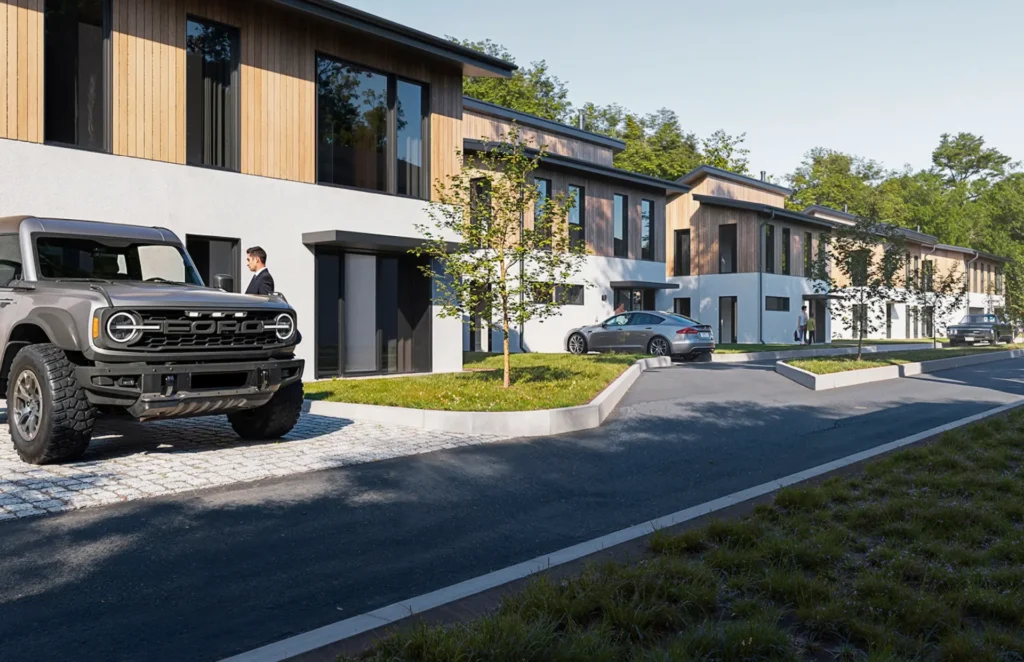
Building an accessory dwelling unit (ADU) typically costs $100,000 to $300,000+ nationally, or roughly $150–$300 per square foot, depending on size, type, and location. In the Greater Seattle Area, costs run notably higher — most homeowners in Seattle and on the Eastside (Bellevue, Redmond, Kirkland) should budget $400–$650 per square foot, with all-in project costs of $400,000–$650,000 for a new detached ADU (DADU), once design, permitting, site work, and utility connections are included.
What Is an ADU?
An ADU, or accessory dwelling unit, is a secondary, self-contained living space on the same lot as a primary home — complete with its own kitchen, bathroom, and entrance. It can be built new, added onto the existing house, or created by converting space you already have, such as a garage or basement.
Homeowners build ADUs for a range of reasons: rental income, housing aging parents or adult children, or adding long-term value to the property. In King County and across the Eastside, ADUs have become an especially popular way to add flexible living space on lots where a full second home isn’t zoned or practical.
The type of ADU you choose has the single biggest impact on cost — we’ll break that down in detail below.
Average Cost to Build an ADU in 2025–2026
National Average Cost Range
Nationally, the average ADU costs around $180,000, though most homeowners end up spending somewhere between $40,000 and $360,000, according to Angi’s 2026 cost data. Mesocore’s 2025 market analysis puts the typical range slightly tighter, at $60,000–$285,000, with detached units averaging closer to $350,000. Per square foot, expect $150–$300 on average — a figure echoed across multiple 2026 industry breakdowns, including ProjectCostRange.
Materials and labor typically consume 60–70% of the total budget, with the remainder split between design fees, permits, and site preparation — line items we break down in detail later in this guide, including why Seattle-area permit costs run well above the national figures.
Average ADU Cost by Size
| ADU Size | Estimated Cost Range (National Average) |
|---|---|
| 400 sq ft | $60,000 – $120,000 |
| 450 sq ft | $70,000 – $135,000 |
| 600 sq ft | $90,000 – $180,000 |
| 700 sq ft | $105,000 – $210,000 |
| 750 sq ft | $115,000 – $225,000 |
| 800 sq ft | $120,000 – $240,000 |
| 900 sq ft | $135,000 – $270,000 |
| 1,200 sq ft | $180,000 – $360,000 |
Table calculated from the $150–$300/sq ft national range cited above. Smaller units carry a higher cost per square foot than larger ones, for reasons explained in the next section.
ADU Cost Per Square Foot Explained
That $150–$300/sq ft range from above is a starting point, not a fixed number — custom or high-performance builds push well past it, into $300–$400/sq ft territory.
A few things determine where your specific project lands:
- Size. Smaller ADUs almost always cost more per square foot, not less — fixed costs like the kitchen, bathroom, and utility hookups get spread over less floor space.
- Type. Attached ADUs and conversions land at the lower end of the range; detached new construction sits at the higher end. Exact figures for each type are below.
- Finish level. Builder-grade finishes keep costs near the low end; custom cabinetry, high-end fixtures, and upgraded exteriors move a project toward $300+/sq ft.
One caution worth flagging: a quoted per-square-foot price doesn’t always tell the whole story. Online estimates and some contractor quotes only reflect “hard costs” — the physical construction — and leave out design fees, permitting, and utility connection charges, which can add tens of thousands of dollars to the real total. We’ll break down the full cost picture, including those often-excluded line items, later in this guide.
ADU Cost by Type
The type of ADU you build has the single biggest impact on your final budget — often more than size or finish level.
| ADU Type | Typical Total Cost | vs. Custom Site-Built |
|---|---|---|
| Garage / basement conversion | $80,000 – $150,000 | Reuses existing structure |
| Attached addition | $150,000 – $300,000 | Baseline |
| Detached new construction (DADU) | $200,000 – $400,000+ | Baseline |
| Two-story | Same as detached, +15–30% per sq ft | More expensive |
| Prefab / modular | — | Up to 20% less |
Detached ADU Cost
A detached ADU (sometimes called a DADU — detached accessory dwelling unit) is a standalone structure built from the ground up, separate from the main house. Because it requires a full foundation, its own roof, and standalone utility connections, it’s typically the most expensive ADU type. Nationally, detached new-construction ADUs run $200,000 to $400,000, according to ADU Construction’s 2026 pricing guide — and that range climbs significantly in high-cost coastal markets, including the Puget Sound region.
Attached ADU Cost (Including Garage & Basement Conversions)
Attached ADUs — additions built onto the existing home, or conversions of an existing garage or basement — are generally the more affordable route, since they reuse a structure, foundation, and sometimes utility lines you already have. Nationally, attached additions run $150,000 to $300,000, or $150–$250 per square foot. Garage conversions sit even lower — typically $80,000 to $150,000 — because the existing structure and roof are already in place; the main added costs are plumbing, electrical, insulation, and finishes to bring the space up to livable code.
Two-Story ADU Cost
Building up rather than out is a common strategy on smaller lots where setbacks limit the buildable footprint. Two-story ADUs cost 15% to 30% more per square foot than a comparable single-story unit, mainly due to structural requirements, an interior staircase, and second-floor systems. The silver lining: because a two-story design packs more livable square footage onto a smaller footprint, the total cost per square foot of the finished building is often only 5–15% higher than an equivalent single-story ADU — making it a reasonable option when lot size is the limiting factor.
Prefab / Modular ADU Cost
Prefabricated and modular ADUs are built (or largely assembled) off-site in a factory, then delivered and installed on the lot. Because factory production reduces labor time, weather delays, and material waste, prefab units can save homeowners up to 20% on total project cost compared to a fully custom, site-built ADU. Prefab pricing also tends to be more transparent upfront, since manufacturers typically offer fixed, published price tiers rather than open-ended custom bids — though delivery, site prep, and utility hookups are usually billed separately.
DIY ADU Cost — Is It Actually Cheaper?
Doing some of the work yourself can trim the budget, but the realistic savings are narrower than many homeowners expect. Structural, electrical, and plumbing work generally must be performed or signed off by licensed professionals to pass inspection — as Angi notes, even homeowners who DIY a prefab shell typically still need to hire pros to run code-compliant utilities. Where DIY genuinely saves money is on labor-only, non-structural tasks: painting, landscaping, flooring, and interior finish work. For most homeowners, the better cost-saving lever is shopping multiple contractor bids and keeping the design simple, rather than attempting a full self-build.

What’s Included in ADU Construction Cost: Full Cost Breakdown
An ADU’s price tag isn’t one number — it’s several distinct cost categories stacked together, and a few of them catch first-time homeowners off guard.
Design & Architectural Plans
Before anything gets built, you need architectural drawings, structural engineering, and a site plan that satisfies local zoning. Design and engineering fees typically run 10–15% of total project cost. Picking a pre-approved floor plan, where your jurisdiction offers one, is the single easiest way to shrink this line item.
Permits & Permit Fees
This is where location matters most. The base building permit alone ranges from $1,350 to $9,000 nationally, according to Angi. Add in plan review, electrical and plumbing permits, and local impact fees, and the real total climbs to $3,000–$25,000 depending on the jurisdiction. Some cities process this in weeks; others take months.
Site Work, Foundation & Utility Hookups
Grading, excavation, drainage, and connecting the ADU to water, sewer, and power. Homeowners routinely underestimate this category — on a typical detached build it runs 12–18% of total construction cost, per Overline’s ADU cost analysis, and it only goes up on a sloped lot or a site needing a septic or sewer upgrade.
Framing, Systems & Labor
Structural framing, roofing, electrical, plumbing, HVAC — the physical core of the build, and the category where labor does the heavy lifting. Across ADU projects nationally, labor eats roughly 40% of the budget, materials about 30%, with the rest split between fees and soft costs.
Interior Finishes
Flooring, cabinetry, countertops, fixtures. This is the one category almost entirely in the homeowner’s control — builder-grade finishes stay near the low end of the per-square-foot range, custom cabinetry and premium appliances push it well past $300–$400/sq ft.
Contractor Overhead & Profit
Not a separate line item on most quotes — it’s baked into the price of everything above. Which is exactly why two bids for the same design, same materials, same scope, can still land tens of thousands of dollars apart.
Factors That Affect ADU Cost
Beyond type and size, a handful of variables explain most of the spread between a $150/sq ft project and a $400+/sq ft one.
- Location. The single biggest swing factor. Local labor rates, permit complexity, and material delivery costs vary enormously by market — the same 800 sq ft ADU can cost twice as much in Seattle as in a lower-cost inland city.
- Site conditions. Sloped lots, poor soil, limited access for equipment, or the need for a new septic or sewer connection all add cost before construction even begins.
- Finish level. Builder-grade vs. custom — this is the widest lever a homeowner controls directly.
- Foundation type. A full concrete foundation costs more than a slab or crawlspace, and a basement ADU adds excavation and waterproofing that a single-story build doesn’t need.
- Design complexity. Custom architecture, non-standard rooflines, and two-story layouts all add engineering and labor hours on top of the base build.
- Material costs and tariffs. Materials aren’t immune to broader economic conditions — tariffs enacted in 2024–2025 have added an estimated 8–15% to total construction costs compared to just two years earlier.
Most of these factors compound. A detached, two-story ADU with a custom design on a sloped lot in a high-cost city checks nearly every box above — which is exactly the kind of project that lands at $600+/sq ft rather than $150.
ADU Costs in the Greater Seattle Area
Seattle and the Eastside sit well above the national average — mostly a function of labor rates, code requirements, and Puget Sound-specific site costs like stormwater management and sewer capacity fees. Total project costs for a new detached ADU (DADU) run $400–$650 per square foot across Seattle and King County — meaning an all-in build typically lands between $400,000 and $650,000. On the Eastside specifically — Bellevue, Redmond, Kirkland — that range shifts even higher, to roughly $450,000–$650,000, per multiple local builders.
Garage and basement conversions are the more accessible entry point here too, though “accessible” is relative: expect $180,000–$300,000 for a quality attached conversion in this market, well above the national attached-ADU range covered earlier.
A meaningful chunk of that premium is soft cost, not construction. City of Seattle permit fees alone run $20,000–$40,000 (and rose another 12% on average in 2025), utility connections add $10,000–$30,000, and the King County Sewer Capacity Charge is billed separately over 15 years. Sales tax on materials and labor can add $23,000 or more on its own. None of these show up in a bare per-square-foot quote — which is exactly why two “estimates” for the same Eastside lot can look wildly different on paper.
On the upside, rental demand here is strong. A well-built DADU typically rents for $1,800–$3,200 per month depending on size, and Eastside units — Bellevue, Kirkland, Redmond — command 10–20% more rent than comparable units in Seattle proper, driven by demand from nearby tech employers.
We build ADUs throughout the greater Seattle area, including Bellevue, Mercer Island, Medina, Clyde Hill, Redmond, Kirkland, Sammamish, Issaquah, Bothell, Woodinville, Cottage Lake, Duvall, Kenmore, Lake Forest Park, Shoreline, Edmonds, Mountlake Terrace, and Renton — as well as Burien, Newcastle, Fall City, Snoqualmie, and North Bend.
How to Get an Accurate ADU Cost Estimate
Online ADU cost calculators are useful for a rough ballpark, but they can’t account for your specific lot, soil conditions, or local permit requirements — the variables that actually move a project from $150,000 to $300,000.
A few steps worth taking, in order, before you commit to a number:
- Have your lot assessed first. Site access, slope, and existing utility capacity are hard to estimate accurately without someone actually looking at the property — and they affect the final number more than any online calculator can guess.
- Request an itemized bid, not just a total. Ask any contractor to break out design, permits, site work, construction, and finishes separately.
- Confirm what’s excluded. As covered earlier, many published estimates only reflect “hard costs.” Ask specifically whether permits, utility hookups, and sales tax are included in the number you’re given.
- Compare bids using the same category breakdown. Once you have two or three itemized quotes, line them up category by category — it’s the only way to tell whether a lower total is a better deal or just missing a line item.
For homeowners in the Bellevue and Eastside area, the fastest way to get a number you can actually plan around is a free, no-obligation estimate based on your specific lot — not a generic calculator.
How to Lower Your ADU Construction Cost
The good news: most of the levers that bring a project down from $600/sq ft toward $400/sq ft are decisions homeowners actually control, not luck.
Go prefab where it fits your lot. As covered above, factory-built and modular construction is one of the more reliable ways to bring total cost down — though delivery access and crane placement need to work for your specific site, which isn’t a given on every Eastside lot.
Use a pre-approved plan instead of a custom design. Skipping full custom architecture cuts both design fees and permit review time, since the plan has already cleared review once.
Share utilities with the main house where code allows. Tying into existing water, sewer, and electrical service — rather than running entirely new lines — avoids a chunk of the site-work cost covered earlier.
Keep the finish level builder-grade. Cabinetry, countertops, and fixtures are the one category with the widest room to adjust without touching the structure.
Get three bids, not one. Pricing for an identical design routinely varies by tens of thousands of dollars between contractors in this market — the only way to know if a quote is fair is to compare it against two others.
One thing not to bank on: a California-style ADU grant. The well-known $40,000 CalHFA grant is a California-only program and has been fully allocated since 2023 with no confirmed relaunch — it doesn’t apply here. A handful of Washington jurisdictions do offer smaller local incentives or fee reductions, so it’s worth asking your local building department directly what, if anything, is currently available.
Is Building an ADU Worth It? (ROI & Rental Income)
Short answer: it depends on whether you’re building for cash flow or for resale — and the math looks different for each.
An ADU produces two kinds of return: monthly rent while you own it, and a bump in appraised value when you sell. The mistake most homeowners make is adding those together. In reality, a large share of what an appraiser credits to a rental unit is the capitalized value of the rent itself — so stacking years of rent on top of the appraisal gain effectively counts the same dollars twice.
In the Seattle market specifically, realistic unlevered yields run roughly 5–7%: garage and basement conversions tend to land near 7%, since they reuse an existing structure and cost less to build, while a standard ground-up detached ADU (DADU) typically nets closer to 5%. On rent alone, simple payback is around 14 years for a conversion and 19–21 years for a new detached unit — conversions win on percentage return, detached units add more absolute value.
At resale, appraisers usually credit a permitted ADU at 70–90% of its construction cost through the sales-comparison approach, which is the method that governs most single-family appraisals — noticeably more conservative than the income-based number ADU sellers often quote.
We break down the full math — real Seattle rent figures, financing scenarios, tax exemptions, and the Washington rent-cap rules that affect ADU owners — in our complete ADU ROI guide.
Financing Options for Your ADU
Most homeowners don’t pay for an ADU in cash — they finance some or all of it. The right option depends mainly on how much equity you already have and whether you’re building new or converting existing space.
| Option | Best For | Key Consideration |
|---|---|---|
| HELOC | Owners with existing equity, phased draws | Variable rate; draws in stages suit a construction timeline |
| Home Equity Loan | Fixed-cost certainty on a known budget | Fixed rate, but interest accrues on the full amount from day one |
| Cash-Out Refinance | Owners with a favorable existing mortgage rate to protect | Resets your entire first mortgage |
| Construction Loan | Ground-up detached builds | Draw-based, converts to a standard mortgage at completion |
One detail worth asking any lender about directly: whether the loan is based on your home’s current value or its as-completed value once the ADU is finished. As-completed valuation can meaningfully increase how much you’re able to borrow, but not every lender offers it.
For a side-by-side comparison of these options and how to think through which one fits your situation, see our guide on financing an ADU and whether it adds value to your home.
FAQ
How much does an ADU cost to build? Nationally, most homeowners spend $100,000–$300,000, or $150–$300 per square foot. In Seattle and the Eastside, budget significantly higher — $400–$650 per square foot, or $400,000–$650,000 all-in for a new detached unit.
How much does an ADU cost in Bellevue or the Eastside specifically? Eastside cities — Bellevue, Redmond, Kirkland — typically run $450,000–$650,000 for a detached ADU, somewhat above Seattle proper, driven by local labor rates and permitting costs.
What’s cheaper, an attached ADU or a detached one? Attached ADUs and garage/basement conversions are almost always cheaper, since they reuse an existing structure, foundation, and often utility lines. A detached ADU requires a full foundation and standalone utility connections, which is why it costs more.
How much is an ADU per square foot? $150–$300/sq ft is the national range. Smaller units usually cost more per square foot, not less, since a kitchen and bathroom cost roughly the same regardless of unit size.
How much does an ADU permit cost? Nationally, $1,350–$9,000 for the base building permit alone. In Seattle, once plan review, utility connections, and impact fees are added, total permitting and soft costs typically run $20,000–$40,000.
Is a prefab ADU cheaper than a site-built one? Usually — factory-built units typically undercut a fully custom, site-built ADU on total cost. The trade-off is less design flexibility, and a site that needs to accommodate delivery and crane access.
Is building an ADU worth it? It depends on whether you’re optimizing for cash flow or resale value — see our full ROI breakdown for real numbers on both.
Get a Free ADU Cost Quote
Every lot is different, and the only number worth planning around is one based on your actual property — not a national average or a generic online calculator.
If you’re in Bellevue, the Eastside, or anywhere across the Greater Seattle Area, get in touch for a free, no-obligation ADU cost estimate. We’ll walk your lot, talk through your goals, and give you an itemized breakdown — not a vague range.