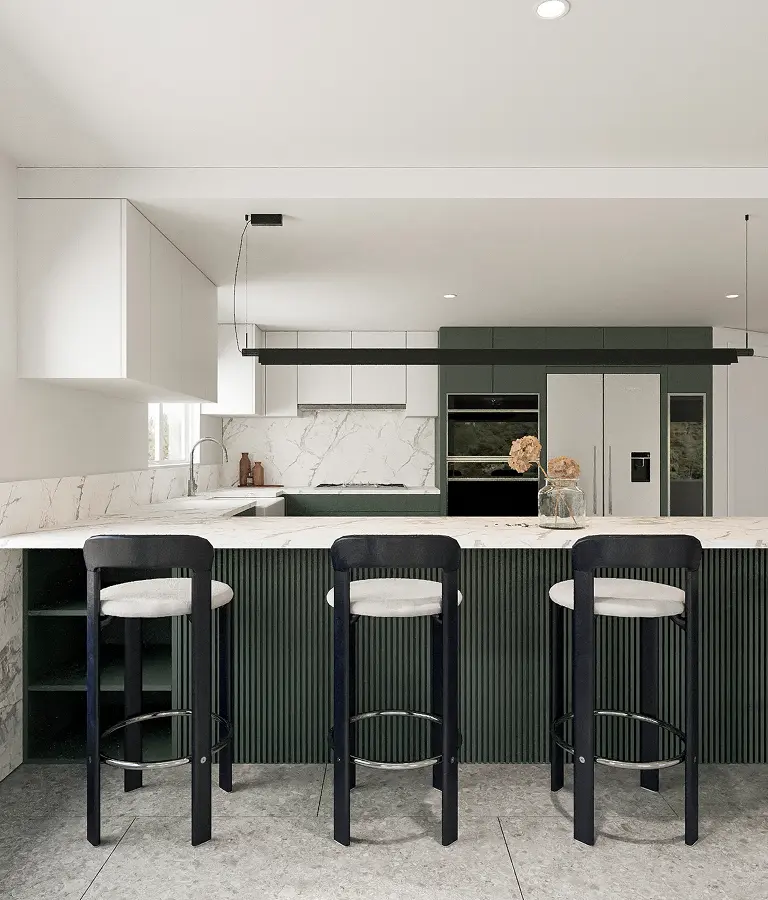
Some renovations in Seattle return 80–96% of their cost at resale. Others return less than 40%. The difference comes down to which projects you choose, how much you spend relative to your neighborhood’s price ceiling and whether the work was done with proper permits.
Renovations with the strongest ROI in the Greater Seattle Area:
- Garage door replacement — up to 194% ROI
- Steel entry door — up to 188% ROI
- Hardwood floor refinishing — up to 147% ROI
- Interior painting — up to 107% ROI
- Deck or patio addition — ~89% ROI
- Minor kitchen remodel — 80–96% ROI
- Bathroom remodel (midrange) — 60–70% ROI
This guide covers which upgrades actually pay off in Seattle’s market, what they realistically cost, what to avoid and how to plan a renovation budget that protects your return.
Does Renovation Actually Increase Home Value? Understanding ROI
When we talk about home renovation ROI, the question is simple: how much value does a project add compared to what it costs? Spend $20,000 and your home value rises by $16,000 — that’s an 80% return. Solid, but it also shows that not every dollar comes back.
In Seattle this balance matters more than in most markets. Labor costs here run higher than the national average, which compresses margins on expensive projects. A minor kitchen remodel can return 80–96% of its cost, while a major kitchen overhaul often drops to around 38%. Bigger budgets don’t guarantee better results — they frequently produce worse ones.
The 30% rule is a useful guardrail: avoid investing more than 30% of your home’s current value in renovations before selling. If your home is worth $800,000, that’s a $240,000 ceiling across all projects. Beyond that threshold, you risk over-improving for your neighborhood — buyers won’t pay a premium just because your finishes are high-end if comparable homes nearby are selling for less.
There’s also a consistent gap between project types. Exterior upgrades and targeted interior updates tend to outperform full-room overhauls on ROI. The reason is straightforward — buyers can see and feel a new front door or refinished floors immediately, while a complete kitchen rebuild at $80,000+ rarely translates dollar-for-dollar into a higher offer.
ROI figures in this guide are drawn from the Remodeling Cost vs. Value Report and adjusted for Seattle’s labor market. Actual returns depend on neighborhood price ceiling, market timing and quality of execution.
Home renovation ROI cost guide: what to expect in Seattle
Before diving into individual projects, here’s the full picture. Use this as a reference point when building your renovation budget — then read the sections below for detail on the highest-impact upgrades.
| Renovation project | Avg. cost in Seattle | Estimated ROI | Priority |
| Garage door replacement | $1,500–$4,500 | up to 194% | Exterior |
| Steel entry door | $2,000–$5,000 | up to 188% | Exterior |
| Hardwood floor refinishing | $2,000–$5,000 | up to 147% | Interior |
| Interior painting | $2,000–$6,000 | up to 107% | Interior |
| Deck / patio addition | $10,000–$25,000 | ~89% | Exterior |
| Minor kitchen remodel | $10,000–$20,000 | 80–96% | Interior |
| Fiber cement siding | $12,000–$22,000 | up to 80% | Exterior |
| Bathroom remodel (midrange) | $5,000–$25,000 | 60–70% | Interior |
| HVAC / heat pump | $8,000–$15,000 | 60–70% | Systems |
| New windows (vinyl) | $10,000–$20,000 | ~68% | Exterior |
| Basement finishing | $20,000–$50,000 | 70–71% | Interior |
| Major kitchen remodel | $50,000–$85,000+ | ~38% | Interior |
Planning a renovation and want to know what makes sense for your specific property and neighborhood? Our team provides detailed estimates and ROI-focused planning across the Greater Seattle Area.
How to plan a renovation to maximize home value in Seattle
Good planning is what separates renovations that pay off from ones that don’t. Before any work begins, two questions define everything else.
Are you selling soon or staying long-term?
If you’re selling within one to two years, every decision should filter through resale value. Focus on upgrades buyers expect in your price range — not what you personally prefer. If you’re staying longer, comfort and function can carry more weight, though ROI still matters when you eventually sell.
What is your neighborhood’s price ceiling?
Every Seattle neighborhood has a ceiling — the price beyond which buyers won’t go regardless of how upgraded the home is. Renovating past that ceiling means spending money you won’t recover. A $150,000 kitchen in a neighborhood where homes sell for $600,000 is a poor investment. The same kitchen in a $1.5M Bellevue or Mercer Island property is a different calculation entirely. Understanding your ceiling before budgeting is the single most important planning step.
Build your budget around impact zones
Kitchens and bathrooms lead on resale value. Exterior upgrades — entry door, garage door, siding — often deliver the highest raw ROI. Flooring and paint affect buyer perception across the entire home for relatively low cost. Systems upgrades like HVAC and insulation appeal to Seattle buyers who pay close attention to energy costs.
A practical budget structure for a resale-focused renovation:
- Set your total ceiling using the 30% rule
- Allocate 40–50% to kitchen and bathroom if they need work
- Reserve 15–20% as contingency — hidden conditions in older Seattle homes are common
- Spend the remainder on exterior and high-visibility interior updates
Bring your contractor in early
Late contractor involvement is one of the most consistent sources of added cost. Design decisions made without input from the person building the work often need to be revised once construction begins. An experienced local contractor can flag what’s realistic for your budget, identify permit requirements upfront and sequence the work to avoid delays.
In Seattle, permits are required for most structural, electrical and plumbing work. Unpermitted upgrades can complicate financing, reduce appraised value and slow or stop a sale — a risk that consistently costs homeowners more than the permit would have.
Kitchen remodel: the highest-ROI room in the house

A minor kitchen remodel consistently delivers the strongest return of any interior renovation — 80–96% ROI according to our projects. A major kitchen overhaul drops to around 38%. That gap tells you everything about how to approach this room.
The most effective kitchen upgrades are targeted, not total. Seattle buyers notice cabinet condition, countertop material, appliance quality and lighting — in that order. A full gut renovation that moves plumbing, reconfigures layout and installs custom everything rarely returns what it costs at resale. The same budget spent on focused improvements to an otherwise functional kitchen almost always outperforms it.
What actually moves the needle for Seattle buyers:
- Cabinet refacing or new doors — the single biggest visual impact at a fraction of replacement cost. If the cabinet boxes are solid, there’s no reason to replace them
- Quartz countertops — durable, low-maintenance and moisture-resistant, which matters in the Pacific Northwest climate. Consistently expected by buyers in Seattle’s mid-to-upper price ranges
- Tile backsplash — relatively low cost, high visual impact, makes the kitchen feel finished
- Updated hardware — one of the cheapest upgrades with immediate effect on the overall look
- Energy-efficient appliances — Seattle buyers pay attention to utility costs. ENERGY STAR appliances are a selling point, not just a feature
- Lighting — under-cabinet lighting and updated overhead fixtures change how the space reads without structural work
What to avoid:
Moving plumbing or reconfiguring the layout adds significant cost and almost never returns at resale unless the existing layout is genuinely dysfunctional. Floor-to-ceiling custom cabinetry and premium appliance packages push the project into major remodel territory — where ROI drops sharply.
Typical costs in Seattle:
- Basic update (hardware, paint, lighting): $5,000–$10,000
- Minor remodel (countertops, cabinet refacing, backsplash, appliances): $10,000–$20,000
- Mid-range remodel (new cabinets, full appliance suite, layout refinements): $35,000–$80,000
- Major / custom remodel: $80,000–$150,000+
For homeowners considering a full kitchen transformation, our kitchen remodeling service covers everything from layout planning to custom cabinetry and final installation across the Greater Seattle Area.
Bathroom upgrade: small space, big return

A midrange bathroom remodel delivers 60–70% ROI — lower than a minor kitchen update, but still one of the most reliable investments in Seattle’s resale market. The pattern holds: targeted, mid-range upgrades consistently outperform high-end overhauls. An upscale bathroom remodel drops to around 37% ROI, meaning the premium finishes rarely come back at sale.
Seattle buyers have clear expectations for bathrooms. A space that feels clean, functional and updated reads as move-in ready. One that feels dated — even if structurally sound — creates doubt about the rest of the home.
Upgrades that consistently perform:
- Walk-in shower — the single most common request from Seattle buyers, often replacing a tub/shower combo. In most homes except those with young children, a tub is no longer a selling requirement
- New vanity and framed mirror — immediately modernizes the space. Double vanities add appeal in primary bathrooms
- Large-format tile — 24″×48″ creates a cleaner look with fewer grout lines and makes smaller bathrooms read as larger
- Updated fixtures — matte black and brushed gold are the current standard in Seattle’s mid-to-upper market. Matching fixtures throughout signals a finished, intentional renovation
- Vanity sconces — lighting on both sides of the mirror eliminates shadows and creates a more polished result than a single overhead fixture
- Radiant floor heating — popular upgrade in Seattle, adds comfort during long damp seasons and consistently noted by buyers as a standout feature
- Water-efficient fixtures — low-flow toilets and showerheads align with Pacific Northwest values and reduce utility costs
What drives costs up without proportional return:
Full layout changes — moving the toilet, shower or tub to a different wall — require rerouting plumbing and can add $5,000–$15,000 to a project while adding little to resale value. Premium materials like book-matched marble or custom glass enclosures push the project into high-end territory where ROI drops significantly.
Typical costs in Seattle:
- Powder room update: from $10,000
- Small bathroom remodel (up to 50 sq ft): from $28,000
- Medium bathroom remodel (50–80 sq ft): from $38,000
- Upscale full remodel: $77,000–$97,000+
Moisture-resistant materials and proper ventilation are non-negotiable in the Pacific Northwest climate — not just for resale but for the long-term performance of the renovation itself.
Our bathroom remodeling service covers full project management across the Greater Seattle Area, from design and permits to final installation.
Curb appeal: the upgrades buyers see first
Exterior improvements deliver some of the highest ROI in Seattle’s market — and they’re consistently underestimated by homeowners who focus renovation budgets on kitchens and bathrooms. A garage door replacement can reach 194% ROI. A steel entry door can return 188%. These are the strongest numbers in the entire Cost vs. Value Report, and they come from projects that cost a fraction of a kitchen remodel.
The logic is straightforward: curb appeal shapes buyer perception before they step inside. A home that looks well-maintained from the street signals quality throughout. One that looks dated or neglected raises doubts — regardless of what’s inside.
Upgrades with the strongest exterior ROI:
- Garage door replacement — the largest visual element on most Seattle homes. A new door in a style that complements the architecture transforms the entire facade. Cost: $1,500–$4,500
- Steel entry door — security, energy efficiency and first impression in one upgrade. Fiberglass and steel doors consistently outperform wood on ROI in this climate. Cost: $2,000–$5,000
- Fiber cement siding — the material of choice in the Pacific Northwest for its moisture resistance and low maintenance. James Hardie products are standard in Seattle’s mid-to-upper market. Cost: $12,000–$22,000
- Exterior paint — one of the highest-return investments per dollar spent. Fresh paint in a color palette that matches the neighborhood standard reads as move-in ready. Cost: $3,000–$8,000
- New windows — improve energy efficiency, reduce utility costs and modernize the exterior simultaneously. Vinyl windows offer the best ROI; wood windows perform better aesthetically in premium properties. Cost: $10,000–$20,000
- Manufactured stone veneer — adds a premium look to entryways and facades without a large structural investment. Works particularly well on older Seattle homes where the original facade feels plain
Landscaping in Seattle’s market
Low-maintenance, drought-tolerant planting with defined edges and clean mulch reads better to Seattle buyers than elaborate landscaping that signals ongoing maintenance costs. A covered entryway or porch addition is worth considering — it adds both curb appeal and practical value in a climate where rain is constant from October through April.
Strong curb appeal can increase perceived home value by 7–10% and meaningfully improve listing performance — homes that photograph well online generate more showings, which drives stronger offers.
Flooring upgrades that buyers notice and pay for

Flooring affects how buyers experience every room in the house simultaneously — it’s the one material choice that shapes the entire home’s feel, not just a single space. Done well, consistent flooring across the main living areas creates a clean, move-in ready impression that justifies a higher offer.
Hardwood and engineered wood: the highest-return options
Hardwood floor refinishing delivers up to 147% ROI — one of the strongest returns in this guide. If your home has existing hardwood under carpet or worn finish, refinishing is almost always worth doing before listing.
New hardwood installation is a different calculation. Solid hardwood performs well in Seattle’s market at the mid-to-upper price range, but it’s sensitive to moisture and humidity fluctuations. Engineered hardwood handles those conditions better while delivering a nearly identical visual result — in most Seattle homes it’s the more practical choice for new installation.
Luxury vinyl plank: the best budget option
LVP has become the standard for renovation-focused projects in Seattle’s mid-range market. It’s fully waterproof, scratch-resistant and visually convincing at a fraction of hardwood’s cost. For kitchens, bathrooms, mudrooms and basement-level spaces, LVP is the most practical choice. Material costs typically run $3–$7 per square foot versus $8–$15 for engineered hardwood.
What consistency does for resale value
The single most impactful flooring decision isn’t the material — it’s continuity. Using the same flooring across connected living spaces eliminates visual breaks that make a home feel smaller and less cohesive. Replacing worn carpet with hard flooring that matches the main living area is one of the fastest ways to modernize an entire floor.
Avoid mixing too many materials across the main level. Three or more different flooring types in connected spaces is a common mistake in older Seattle homes that underwent piecemeal renovation — it reads as unfinished to buyers.
For a full breakdown of flooring options by material, room type and budget, see our flooring guide.
Energy efficiency upgrades: value that goes beyond aesthetics
Energy efficiency has moved from a nice-to-have to an active buying criterion in Seattle’s market. Buyers here pay close attention to utility costs, sustainability credentials and long-term operating expenses. An energy-efficient home is easier to sell, faster to appraise and increasingly commands a premium over comparable properties that haven’t been upgraded.
Heat pumps: the upgrade with the broadest appeal
Washington State’s climate makes heat pumps the most practical HVAC upgrade available. A modern heat pump provides both heating and cooling in one system — relevant as Seattle summers have become meaningfully hotter. Heat pumps run on electricity rather than gas, which aligns with Seattle City Light’s relatively low electricity rates and the growing segment of buyers who prefer all-electric homes. Installation cost typically runs $8,000–$15,000. ROI sits at 60–70%, but the selling advantage goes beyond the number.
Insulation and air sealing
Older Seattle-area homes built before 1980 are frequently under-insulated by current standards. Upgrading attic insulation, sealing air gaps and addressing crawl space moisture barriers improves comfort, reduces heating costs and removes a negotiating point for buyers who flag it in pre-sale inspections.
Windows
Energy-efficient vinyl windows deliver around 68% ROI while modernizing the exterior appearance. In Seattle’s climate, double or triple-pane windows reduce condensation — a common issue in older homes that buyers notice. Fiberglass windows perform better thermally but cost more; vinyl offers the best balance of performance and ROI for most renovation projects.
Solar panels
The federal 30% tax credit available through 2032 meaningfully reduces upfront cost. Owned systems are preferable to leased systems from a resale perspective — leases can complicate a sale if the buyer doesn’t want to assume them. ROI varies widely by system size and utility rates — consult a local installer for property-specific projections.
Available incentives in Washington State
Several energy upgrades qualify for rebates through Puget Sound Energy and Seattle City Light, reducing effective project costs. Heat pumps, insulation, windows and smart thermostats are all eligible depending on current program availability.
Adding livable square footage: basement, attic, and outdoor space

Adding usable space is one of the most direct ways to increase a home’s appraised value. In Seattle’s market where lot sizes are constrained and new construction is expensive, adding space within the existing footprint or into the yard is often more practical than moving.
Finished basement: ~70–71% ROI
A finished basement converts underused space into something buyers can immediately picture using — a home office, guest suite, gym or entertainment area. Moisture control and vapor barrier installation are non-negotiable before finishing any basement in the Pacific Northwest. Proper egress windows are also required by code for any habitable basement space. Typical cost: $20,000–$50,000.
Attic conversion: ~56% ROI
An attic conversion adds a bedroom or dedicated workspace without expanding the footprint. Before budgeting, confirm adequate headroom — Seattle’s building code requires a minimum ceiling height of 7 feet for habitable space over at least 50% of the floor area. Many older Seattle homes don’t meet this without raising the roofline, which significantly increases cost and complexity. Typical cost: $30,000–$80,000.
Deck or patio addition: ~89% ROI
Outdoor living space consistently performs well in Seattle’s market. A well-designed deck or covered patio extends usable living area and photographs well for listings. Composite decking materials like Trex outperform wood in Seattle’s climate — they resist moisture and don’t require annual sealing. A basic deck runs $10,000–$25,000; a covered structure with lighting and built-in seating can reach $40,000–$60,000.
One consistent mistake: converting the garage
In Seattle’s market, buyers expect covered parking and storage. A garage conversion — even a well-executed one — removes something most buyers consider a baseline feature. Unless the property has alternative parking that genuinely compensates, garage conversions typically reduce buyer pool and offer price.
For homeowners considering a larger addition — a primary suite, expanded kitchen or full second story — our home additions service covers the full process from design and permits to construction across the Greater Seattle Area.
Renovations that do not increase home value
In Seattle’s market where buyers are informed and price-sensitive, certain upgrades consistently fail to return their cost — and some actively reduce buyer interest.
Over-improving for the neighborhood. No renovation can push a home significantly above what comparable properties in the neighborhood are selling for. A $150,000 kitchen in a block of $650,000 homes will not produce $150,000 in added value. This is the most expensive mistake Seattle homeowners make, and it happens most often when renovation decisions are driven by personal taste rather than market data.
Swimming pools. Installation cost runs $60,000–$100,000+. Buyers factor in ongoing maintenance, insurance, safety requirements and the shortened usable season in the Pacific Northwest. In most Seattle neighborhoods a pool narrows the buyer pool without adding measurable value.
Highly personalized design choices. Wine cellars, home theaters with fixed stadium seating and elaborately themed rooms reduce the number of buyers who can picture themselves in the space. Neutral, quality-executed spaces consistently outperform personality-driven ones at resale.
Upscale finishes in standard homes. Premium appliance packages, marble countertops and custom millwork in mid-range properties don’t produce proportional returns. Buyers in that price range compare your home to others at the same price point, not to higher-tier properties.
Complex landscaping and water features. Elaborate gardens, koi ponds and water features signal ongoing cost to buyers rather than added value. Seattle buyers respond to clean, low-maintenance outdoor spaces.
Unpermitted work. In King County, unpermitted work can complicate mortgage financing, trigger required remediation, reduce appraised value and in some cases legally require demolition of the unpermitted structure. The cost of permitting is always less than the cost of the problems unpermitted work creates.
Increase your home value with help from Maksymov Brownstone
To increase home value after renovation, every decision needs to be intentional. The right results come from clear planning, understanding the local market and executing each step with care.
Maksymov Brownstone works with Seattle homeowners across King and Snohomish counties — from kitchen remodels and bathroom renovations to home additions and full-home renovations. Our approach is ROI-driven: we recommend what will bring value in your specific neighborhood, not just what looks good.
If you’re planning your next project, schedule a consultation. We’ll review your home, outline the highest-impact upgrades and provide a detailed estimate tailored to your goals.