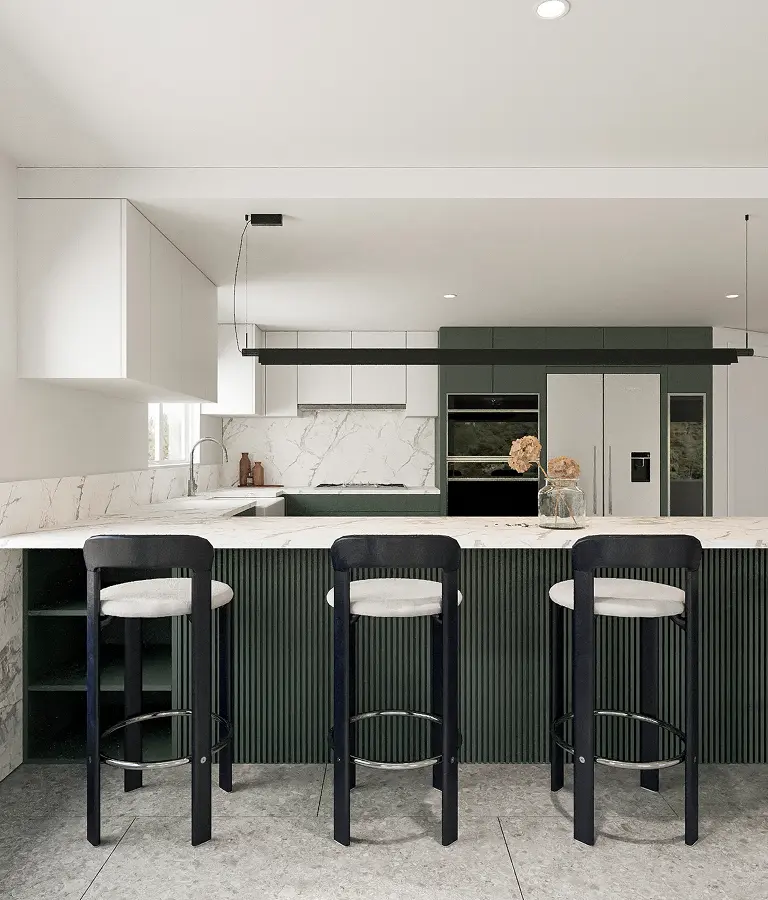
Choosing flooring in the Seattle area is not the same as anywhere else. The Pacific Northwest climate — with its consistent moisture and humidity — puts real pressure on materials that might perform fine in drier regions. At Maksymov Brownstone, we install flooring across Kirkland, Bellevue, Redmond and the greater Seattle area, so we see firsthand what holds up and what doesn’t. This guide covers every major flooring type, with costs, honest pros and cons, and our take on what works best in local homes.
How to choose the right flooring for your home
Start with the room, not the look. Bathrooms, kitchens and basements deal with moisture regularly — in Seattle’s climate, that’s year-round. For those spaces, waterproof or water-resistant materials are the only practical choice.
Traffic matters too. Hallways, living rooms and open-plan areas need something that handles daily wear without showing it. Homes with kids or pets need surfaces that are easy to clean and resistant to scratches.
Budget plays a role on both ends — material cost and installation. Some flooring types like LVP are genuinely DIY-friendly; others like tile and hardwood need a professional to get right. We always recommend factoring in both before deciding.
Style still matters, of course — but in our experience, homeowners who lead with performance and then find a style they love are always happier with the result long-term.
Flooring comparison: costs and performance at a glance
| Flooring type | Cost / sq ft | Water resistance | Durability | Best for Seattle |
| Hardwood | $3–$12 | Low | High | Above-grade, dry rooms only |
| Engineered hardwood | $3–$10 | Medium | High | Main floors, over concrete |
| Laminate | $1–$3 | Low–Medium | Medium–High | Bedrooms, low-moisture areas |
| Luxury vinyl (LVP/LVT) | $1.50–$4 | Waterproof | High | Kitchens, baths, basements |
| Tile (porcelain/ceramic) | $2–$10 | Waterproof | Very high | Wet areas, radiant heat |
| Carpet | $2–$5 | Low | Medium | Bedrooms, upper floors |
| Bamboo | $3–$8 | Medium | Medium–High | Main floors, climate-controlled |
| Cork | $2–$7 | Low–Medium | Medium | Kitchens, playrooms |
| Stone | $5–$20+ | Medium–High | Very high | Entryways, bathrooms |
Prices reflect materials only. Installation adds $2–$8 per sq ft depending on type and subfloor condition.
Hardwood flooring

Hardwood is still the benchmark for resale value and long-term appeal. Oak is the most common choice — it balances durability and cost well. Maple gives a cleaner, harder surface. Walnut and cherry bring warmer, darker tones for a more premium feel. Each species sits at a different point on the hardness scale, which matters in high-traffic areas.
In Seattle homes, solid hardwood works best in above-grade rooms where moisture is controlled. We always check subfloor conditions and humidity levels before installation — skipping that step is the main reason hardwood fails in the Pacific Northwest. One advantage worth noting: wood floors can be sanded and refinished multiple times, which significantly extends their lifespan. Material cost runs $3–$12 per sq ft.
Pros: Timeless look, refinishable, adds resale value, long lifespan.
Cons: Sensitive to moisture, can scratch, not suitable for bathrooms or basements.
Engineered hardwood flooring
Engineered hardwood gives you the look of real wood with better stability. Its layered construction makes it less sensitive to humidity changes — which is exactly why we recommend it often in Seattle kitchens and older homes with concrete subfloors. It installs well over radiant heating systems too, which is a common request in Pacific Northwest remodels.
The tradeoff is refinishing — most engineered products handle one or two sandings at most, compared to solid wood’s five or six. It’s also not fully waterproof, so prolonged moisture exposure is still a risk. Material cost runs $3–$10 per sq ft.
Pros: More stable than solid wood, works over concrete, real wood look, compatible with radiant heat.
Cons: Limited refinishing, not fully waterproof, still sensitive to moisture over time.
Laminate flooring

Laminate is the most budget-friendly option that still looks good. Today’s products replicate wood and stone finishes convincingly, and the scratch-resistant surface holds up well in high-traffic areas — which makes it a practical choice for family homes. It’s also one of the easier materials to install, which keeps total project costs down.
The main limitation in Seattle is moisture. Most laminate is water-resistant, not waterproof — it can swell if water gets into the seams and stays there. We avoid installing it in bathrooms, laundry rooms or basement spaces where humidity is consistently high. For those areas, LVP is a better fit. Material cost runs $1–$3 per sq ft, with installation adding $2–$8 per sq ft.
Luxury vinyl plank (LVP) and luxury vinyl tile (LVT)
LVP and LVT have become our most recommended flooring type for Seattle homes — and for good reason. Both are fully waterproof, dimensionally stable, and available in finishes that closely mimic hardwood and stone. For kitchens, bathrooms, basements and mudrooms, it’s hard to find a better combination of performance and value.
There are two core constructions to know: SPC (stone plastic composite) is denser and better for high-traffic areas; WPC (wood plastic composite) is softer underfoot and quieter in everyday use. Most products include attached underlayment and click-lock installation, which means they can float over most existing subfloors — useful in whole house renovations where ripping out the old floor adds cost. Material cost runs $1.50–$4 per sq ft.
Pros: Fully waterproof, durable, affordable, easy installation, works over most subfloors.
Cons: Less authentic feel than real wood, can dent under heavy furniture, lower resale value than hardwood.
Tile flooring (ceramic and porcelain)

For bathrooms and kitchens, tile is still our first recommendation — nothing handles moisture and daily use as reliably. Between ceramic and porcelain, we guide most clients toward porcelain for floors: it’s denser, harder and significantly more water-resistant than ceramic, which matters in wet areas.
Large-format tiles are popular in Seattle remodels right now — fewer grout lines means a cleaner look and less maintenance. Tile also pairs well with radiant heating, which we often include in bathroom renovations to offset the cold underfoot feel. The main consideration is installation: subfloor prep and grouting need to be done right, which is why we don’t recommend tile as a DIY project. Material cost runs $2–$10 per sq ft.
Carpet flooring
Carpet remains a strong choice for bedrooms, upper floors and playrooms where comfort takes priority over durability. It adds warmth during Seattle’s cooler months and helps absorb sound — particularly useful in multi-level homes where noise transfer between floors is a common concern.
For fiber, nylon is the most durable and handles wear well over time. Polyester costs less but shows wear faster. Wool is a natural, high-end option that performs well in Seattle’s climate without the moisture sensitivity you’d expect — though it comes at a higher price point. The main drawbacks are staining and allergens: low-pile options are easier to maintain, and homes with allergy sensitivities should factor that in. We don’t install carpet in kitchens, bathrooms or basement remodeling projects — moisture makes it impractical. Most carpet projects run $780–$2,800 depending on room size and material.
Bamboo flooring
Bamboo performs closer to hardwood than its name suggests — strand-woven bamboo in particular is harder than most oak species and handles daily wear well. It’s also a genuinely renewable material, reaching maturity in 3–5 years compared to decades for hardwood, which appeals to clients focused on sustainable building choices.
The limitation in Seattle is moisture sensitivity. Bamboo expands and contracts with humidity changes, which means proper acclimation before installation and a stable indoor climate afterward are both important. In homes with good climate control it holds up well and gives a clean, contemporary look that fits Pacific Northwest interiors. For home additions or new construction where conditions are controlled from the start, it’s a particularly good fit. Material cost runs $3–$8 per sq ft.
Cork flooring
Cork is an underrated option that we bring up when comfort underfoot is a priority. It has a natural cushion that makes a real difference in spaces where you spend a lot of time standing — kitchens and home offices in particular. It also absorbs sound well and retains heat, which are both practical advantages in Pacific Northwest homes.
The material comes from bark harvested without cutting the tree down, which makes it one of the more genuinely sustainable flooring options available. On the practical side, cork dents under heavy furniture and fades with prolonged direct sunlight — both worth planning around. It also needs proper sealing to handle moisture, especially in kitchen renovations where spills are frequent. With the right prep and sealing it holds up well. Material cost runs $2–$7 per sq ft.
Stone flooring (marble, travertine, slate, limestone)

Natural stone is the highest-end flooring material we work with, and each type has a distinct character. Marble brings refined veining and a polished look. Travertine has a warmer, more textured feel. Slate is denser and more rustic — it also happens to be one of the more slip-resistant options, which matters in wet entry areas. Limestone gives a softer, neutral appearance that works well in open-plan spaces.
With proper sealing, stone is extremely durable and can last the lifetime of the home. It also works both indoors and outdoors, which adds flexibility in home design projects where continuity between interior and exterior matters. The cold-underfoot feel is the most common objection — we typically pair stone floors with radiant heating in bathroom renovations and entryways. Some types are more porous and need periodic resealing to prevent staining. Material cost runs $5–$20+ per sq ft, making it one of the more significant investments in a remodel.
Work with a Seattle flooring contractor who knows the local climate
Every flooring decision involves a tradeoff between performance, budget and style — and in Seattle homes, moisture and humidity add an extra layer to that equation. The right choice for a Kirkland kitchen is not necessarily the right choice for a Bellevue basement or a Redmond living room.
At Maksymov Brownstone we handle flooring as part of larger renovation projects across the greater Seattle area — from kitchen remodeling and bathroom renovations to whole house renovations and home additions. We serve homeowners in Kirkland, Bellevue, Redmond, Bothell, Sammamish and surrounding areas.
If you’re planning new flooring as part of a remodel, contact our team for a consultation. We’ll assess your space, recommend the right material for your conditions, and give you a clear estimate upfront.